The funny side of problems in marriage

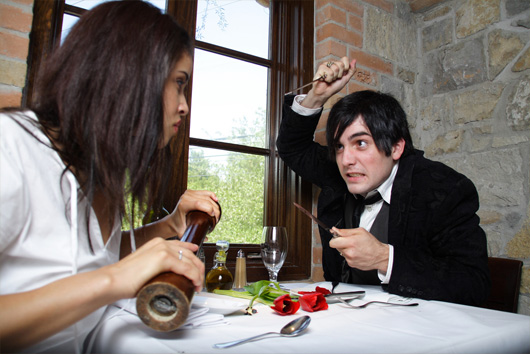
Author Jenna McCarthy takes a humorous look at the unrealistic expectations of marriage in this funny and smart TED talk. It’s important to step back once and a while and look at the funny side of the problems in marriage. What are we really promising in those well worn oaths?

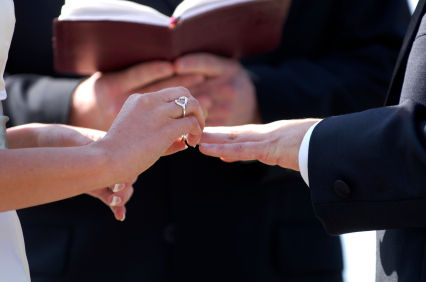
The big day comes, and they’ll stand before God and family, and some guy her dad once did business with, and they’ll vow that nothing, not abject poverty, not life-threatening illness, not complete and utter misery, will ever put the tiniest damper on their eternal love and devotion.

Hearing it like that, you realize that this is some pretty far-fetched promise, especially in thelight of America’s nearly %50 divorce rate. The truth is, every single married couple faces problems in marriage. Life goes by with its successes and challenges and this puts stresses on us and affects all our relationships. In addition, through the years you spend together-the rest of your lives-you will change and grow as a person. You will find new interests and hobbies, your way of looking at life may change.

How can your relationship last through this and the problems in marriage it brings? Perhaps by making a new kind of promise. To be partners in life, helping each other to navigate its twists and turns, respecting and trusting each other while you grow. Recognize that love will be of changing qualities-at times fierce and warming, and at others a cool undercurrent. I believe that with open dialogue about the real difficulties, and less stressing expectations, is part of the path to longer, stronger marriages.

Have fun with this video. Jenna is a great speaker, and she ends with a positive note in spite of all her funny marriage problems griping!


Share

Bully: a brave new film

Bullying is a very real, life-changing and potentially life-threatening experience that millions of kids go through every year. It has received more attention in recent years do to what seems like an epidemic of young children ending their lives because of it. I remember first feeling the outrage in 2009 when I heard that an 11 year old hung himself after enduring constant anti-gay bulling. Yes, an 11 year old.

Why are certain kids bullied? Because they are socially awkward, or (perceived to be) gay, or have an accent, or are smaller than others or have a learning disability. Sometimes it seems for no reason at all. Once a kid begins being bullied, he immediately falls into a ruthless pattern of repeated abuse. He becomes the pariah.

How do we communicate to our children-both the bullies, the victims, and the bystanders-that this behavior is wrong? Also important, how do we communicate to adults that it is unacceptable to turn a blind eye and that action must be taken? I believe it will be very difficult to cultivate a just, civil society if we teach our children that violence is an acceptable form of expression towards those we dislike, that turning a blind eye to injustice is expected, and that society will provide no help for its victims. Additionally, the idea that it is natural to be dominated and to dominate others will interfere with their ability to form healthy relationships as adults. “Bullying” of one’s spouse is a type of marriage problem that is very serious and devastatingly common-in some cases we call is abuse. It should not be tolerated in children or adults.

There is an amazing new documentary coming out March 30th titled “Bully.” This film has the potential to reach both children and adults in a profound way. School administrators are considering screening it in middle and high schools across the country, and you can watch the trailer below. Recently, the film has hit a major road bump: the MPAA has given it an R rating. This means that no children under 17 can see it without a parent and it will not be allowed to be shown at schools. As far as I can tell, the movie was just one vote short of being approved as PG-13, and the objection was rough language used by some of the bullies. The producers appealed the decision and it was denied again.

Katy Butler is a high school student from Wisconson who has started an online petition to get the MPAA to downgrade the rating to PG-13. She herself is a victim of bullying. As Katy puts it, the MPAA’s decision “means that a film documenting the abuse that millions of kids experience through bullying won’t be seen by the audience that needs to see it the most.” As of this post, the petition had 115,604 signatures.

Watch the trailer, decide for yourself, and let me know what you think! How do you approach the topic of bullying with your child? Were you bullied or a bully in school?

Share

What’s your style of intimacy in relationships?

You enjoy holding hands when you walk down the street and you can tell that your spouse doesn’t like it. In fact, she doesn’t seem comfortable with much physical intimacy outside of sex. Is your marriage in trouble? Turns out you may just have opposite styles of intimacy in relationships.

According to a recent Wall Street Journal article, we tend to settle into relationships with our intimacy style opposites. Giving types shower their spouses with loving gestures and cuddle time. They enjoy drawing out reactions from their more reserved partners. Their Reserved spouses secretly enjoy the commitment and loving gestures of the givers-they just aren’t comfortable with reciprocating.

Much of our preferences for intimacy in relationships comes from our early family environment. Some families are very “touchy-huggy-kissy” and display affection through physical intimacy. Other families express love and caring by spending quality time together, planning adventures and meals, and helping each other out. These experiences frame our expectations for what a loving relationship will look like. Falling in love with someone of the opposite style can be confusing and unsettling when our expectations aren’t met.

"A kissy-wissy for my wovely Wifey-poo!"

Marriage problems arise when these differences go unacknowledged and un-discussed and assumptions are made about the causes of the behavior. If you are a reserved or avoidant type, make sure your spouse knows you love him/her very, very much, and just have a different way of expressing it. Also be clear on how to communicate in a relationship about when you are upset or feeling down. This way your spouse won’t have to worry that your normal reserved personality is a sign that something is wrong-he knows that if something is wrong, you will tell him.

In the end, making marriage work between intimacy opposites takes adaptation on both sides. Your intimacy style is part learned and it can change. Be open and accepting of who each of you are and what you need, and also stay willing to experiment with new ways of being. At the same time, marriage counseling can help you work through underlying issues that may be causing trouble. For example, you may be reserved and avoidant because you have experienced a traumatic relationship in the past. Delving into these issues with your spouse and marriage counselor will help increase understanding and compassion, and strengthen your relationship!

Share

Learn how to make a marriage work before you get married

If you love someone enough to consider marrying them, the best gift you can give them is learning how to make a marriage work before you exchange vows. Chances are you’ve already been together long enough to know each other’s flaws and to recognize your own areas for improvement. Perhaps you’ve been together through thick and thin, broken up, reconciled differences, and moved forwards together. Knowing how you work through issues together and having the commitment to getting marriage counseling to better your skills will set your marriage off on the right track.

I fell in love with this “Save the Date” video (below) because not only is it artistically done but tells a beautiful story. This was a great portrait of a relationship that has the skills for how to make a marriage work. Before getting hitched this couple had already learned to work together to overcome differences, showed commitment and compassion for the other’s concerns and desires, and were willing to be flexible an open-minded for each other. These are key elements of how to make a relationship last.

The two lovers start out seeming very different: the woman is a fashionista who loves shopping and elegance; the man is a football fan who is never without his junk food. They meet and realize they have much more in common than first appears. At the same time, their relationship runs into problems because of their superficial differences-they can’t appreciate each other’s lifestyles. In the end, time passes, they learn and grow, adventures are had and…well, you’ll see!

Watch the video and let me know what you think. How do you know when/if you are ready to get married? What kind of issues did you deal with during your engagement? What do you think is the most important pre-marital step in how to make a marriage work?

Share

Marriage Issues: How to stop nagging before it kills your marriage

Nagging is one of the most debilitating marriage issues, right up there with adultery as a leading cause of divorce, says Wall Street Journal columnist Elizabeth Bernstein. Nagging is a pattern of negative communication in a relationship. One person asks for something and receives either a vague response or silence. The asking continues, inciting more resistance in the other person.

According to Bernstein’s research, women are more prone to nag because they are conditioned to feel responsible for managing home life. They are also more sensitive to signs that there is something wrong with their spouse. A vague or non-response from their spouse tends to worry women, and so they continue asking. An anxious, obsessive, or highly organized personality of any gender will be more inclined to nag.At the same time, nagees report feeling scolded like a child, not being trusted to be responsible, and having their needs and way of doing things unappreciated. Many couples begin fighting about nagging and end up ignoring the core issues underneath-each individual’s concerns and needs.

Here are some tips for dealing with nagging before it becomes one of your worst marriage issues:

1. Admit you are part of the problem. When it comes to the nagging cycle, both parties are guilty and both have work to do to solve their marriage issues. The good news is, there are many steps you can take to find win-win solutions that will leave you both satisfied.

2. When you ask for things, try to frame your request in the least aggressive way possible. The wife in the article began using Post-it notes with funny messages from, for example, the sink that needed unclogging. By communicating through notes instead of face-to-face her husband didn’t feel so attacked and stressed.

3. Try an experiment. Ask once, give a reasonable deadline, and then wait-no more asking in between! Chances are, your spouse will end up accomplishing the task. This may help you realize that he/she does things at his/her own pace, and your requests do get honored in the end. If he doesn’t follow through, you two need to site down and talk about expectations. Begin by explaining your own feelings -how you feel let down and frustrated when something that matters to you is left undone-to avoid being accusatory. Remain open-minded and interested to hear his side of the story.

4. For repeated things that need to get done, such as chores, make a written agreement of how and when each task will be accomplished. Explain to each other what you are willing and able to do each week, and how you prefer to have it done. If you disagree about something, remember to look deep into your underlying reason behind your opinion-don’t get stuck on one solution to your concern when you can find another solution that works for both of you!

Working through nagging issues involves much learning about “what makes the other person tick.” You will grow closer from the process and your marriage will grow stronger!

Share

The I Love Lucy guide to a happy marriage

Here’s a witty compilation from a Youtube poster, a tongue-in-cheek look at advice for a happy marriage from I Love Lucy. The areas of advice are (1) discuss things kindly, (2) never lose you temper, (3) listen to your partner, (4) be honest, (5) be considerate, (6) appreciate your spouse’s work, and (7) never let the flame go cold. Sounds like good advice to me! Of course, when it comes to Lucille and Desi, nothing is that simple. This is one of the most well-known and popular couples in pop culture history. What do you think: do they have a good marriage?

It’s interesting to see the differences in the accepted roles of man and wife 50 years ago versus today. Desi is in control of the finances; Lucy gets an allowance from him. Lucy doesn’t work and is portrayed as a relatively childish, trouble-making girl who is always causing disasters. The two have separate beds! The spouses are constantly playing games with each other in an endless loop of give and take. They insult each other openly. Desi appears to physically threaten Lucy many times, although they never have any violent moments.

When I really think about it, much of the marriages portrayed in the show are disturbing. So what makes them so funny and enjoyable at the same time?

What I like about I Love Lucy, when I get past the sexist faux-pas, is that Lucy is feisty and independent and Desi is infinitely patient. They seem like equals. And they always manage to resolve their problems in a loving and forgiving manner. There’s a lot of passion and understanding between them and they do seem to have a happy marriage.

There’s always danger analyzing something meant to be funny in a serious way because, after all, comedy works by exaggerating normal behavior. Still, it’s fodder for some interesting conversation. So check out this clip and chime in. What rubs you the wrong way about their relationship? What do you like? Is this still, or was it ever, a good model for a happy marriage?

Share

How to fight fair

Today I wanted to explore Dr. King’s sayings on protest in terms of how to fight fair with your spouse. This is the second of 3 posts celebrating Dr. Martin Luther King and kicking off Black History Month in February.

2. ”Love is the only force capable of transforming an enemy into friend.” ~MLK

2011 was a year of protests, from Egypt to the Occupation of towns across America. Many of these protests involved thousands of peaceful, non-violent protestors. At the same time, many of them also devolved into violence. Watching the Occupy Oakland protestors next door to my home town, Alameda, I saw first hand how similar this conflict was to how argument escalates in a marriage. It reminded me of how important it is to learn how to fight fair and carry Dr. King’s words in our hearts.

It started out peacefully enough with one side-the “people”-stating their opinion and displeasure at their relationship with the other side-the government. At first side #1 received non-response from the other side (the Mayor’s office). So they continued with their complaint. With no dialog occurring between the two sides, each became more and more worked up and entrenched in their different opinions. After becoming increasingly frustrated with the protesters and unsure of what to do, side #2 lashed out with frustration at side #1. Both sides ended up exploding at each other with terrible violence. When the smoke cleared, both were hurt, embarrassed, and more alienated from each other than before, and nothing productive had come out of the encounter.

Both the Occupy protesters, the government, and our marriages can benefit from learning how to fight fair. Only mutual love and respect can solve a dispute between two parties-screaming louder to drown out the shouts of the other side will not convince them that you are right. Here’s how to win a fight with love. This is how to fight fair.

1. Love means...being truly interested in your spouse’s point of view and hearing her opinion.

Realize that both of you have important view points to contribute the issue. If you respect your spouse, you will respect their needs and desires reflected in their opinions. Being negative or dismissive about things that are important to your spouse will lead to serious marriage problems.

2. Love means…willing to work together until you find a win-win solution.

Try to get to the root causes of your opinions instead of focusing on opposing solutions. For example, you want to go biking but your spouse wants to watch a movie. Two opposing ideas, right? Well what if your underlying reason is that you want to get out of the house, and your spouse’s reason is that she has been on her feet all day and wants to rest. Now you can find a new solution that addresses both your desires. Why not go for a car ride-you get out of the house, and she can stay seated. Win-win!

3. Love means…knowing where your anger limits are and working around them.

Everyone has hot spots that get them from calm to raging in 2 seconds. Know what gets you riled and will push you away from how to fight fair. At these times practice Exit and Re-enter strategy: leave the room to cool down and return once you’re calm.

4. Love means…being on the same team.

If you treat your partner with love, you will realize that you are always on the same team. You are both working together on how to make a relationship last long, healthy and happy for yourselves and your children. Likewise, the citizen and the government are really working towards the same goal: to have a safe, supportive, and respectful relationship, and to create a great country. Maybe marriage skills and conflict resolution should be required teaching in high school civics classes!

Share

Dr. King’s words teach us how to rekindle a relationship

From now through February the Power of Two Marriage Blog be celebrating Black History Month! I’m starting off with a series of 3 posts that use Dr. Martin Luther King Jr.’s quotes as tips for how to rekindle a relationship. As I’ve experienced from working with PO2, the skills we use to interact peacefully with our fellow citizens are completely applicable to happy marriages, and visa versa-you can use the skills you learn in online marriage counseling and marriage help books to better all of your relationships.

1. Faith is taking the first step even when you don’t see the whole staircase. ~MLK

Marriage is an act of faith. It means promising to trust as well as love another person through all of life’s ups and downs. In a previous guest post Lori Lowe explains how trusting your spouse, assuming the best in the situation, is a key element of how to rekindle a relationship. This starts with small things. Did he forget to take out the trash again? Instead of thinking “He’s so lazy!” or “He just expects me to do all the work!” avoid anger by first assuming the best case scenario: it was a simple mistake and he was distracted by all the other things he has to do. Maintaining a positive outlook on your marriage and spouse, coupled with asking questions when things are unclear, will help avoid conflicts and increase understanding.

This applies to bigger issues, too. Lori includes this anecdote of how one coupled learned how to rekindle a relationship after a big misunderstanding:

After the death of their infant son, John and Kathy Eubanks were more than devastated. The lactating mom, Kathy, was hormonal and extremely emotional. John soon returned to work where he saw little sympathy from coworkers, many of whom didn’t even acknowledge his loss.Nine months later, John returned home to Kathy crying again and said, “I don’t know how much more of this I can take.” He says he meant that it was very hard to see her suffering. However, Kathy interpreted his comment to mean, “If you don’t get happy, I will leave.” She was convinced divorce was imminent because of her assumption.

One day Kathy confronted her husband and asked, “Are you planning to divorce me?” (Remember that was her assumption due to his earlier statement.) John was taken by surprise and said, “No way.” It led to a breakthrough discussion where they shared their feelings and made a commitment to grieve together and to be unified in their suffering.

Remember, ask questions before you make assumptions, and always assume the best in your spouse. Starting from a point faith that he or she is on your side, loves you, and would never intentionally hurt you, is part of how to rekindle a relationship that is suffering from negativity. Here is a link to a fun flash game that will help you cool down your anger and see your spouse’s POV.

Next week: ”Love is the only force capable of transforming an enemy into friend,” or, How to Win an Argument…

A note about Dr. King:

Over the years MLK has become an American mythological figure and much of the complexity of his real life and personality have been lost. For example, many Americans today don’t know that Dr. King had a very troubled marriage plagued with infidelities. At the same time, he a was a remarkably well spoken and intelligent leader whose words cut to the core of how human beings should treat each other. We can easily apply some of his famous sayings to our marriages.

Share

Funny Couples Photos: The Matching Outfits Edition

Do you have those days when you and your spouse get dressed, roll out of the house and realize that you’ve put on almost the exact same outfit? You do it without communication in relationships-it’s subconscious. And it leads to some pretty funny couples photos. When I was a teenager, this would happen quite often with my mom, which embarrassed me to no end. Now when matching outfits happens with my significant, other we usually just shrug and keep going. We are too lazy to go back home to change. What do you think of matching outfits? Fun or tacky? Cute or creepy? An inevitable part of married life?

Here are some funny couples photos of those who have gone out of their way to coordinate with each other-the good, the bad, and the hilarious. Happy Monday, and happy MLK day (I know this post has nothing to do with MLK…I’m saving that for Thursday).

Enjoy!


First, the unintentionally hilarious matching outfits:

Next, the intentionally funny!

And lastly, darn cute matching outfits:

Share

Working through sex in marriage problems: Review of ‘Orgasm, Inc.”

For this special post on sex in marriage I watched one of the highest rated movies of this year (Rotten Tomatoes score of 86%): ‘Orgasm, Inc’. This is a funny, moving, and profound documentary by filmmaker Liz Cannon. It tells the story of pharmaceutical industry’s is race to invent the pill, spray, or cream to treat Female Sexual Dysfunction (FSD), and the secret behind it all: Female Sexual Dysfunction may not really exist.

FSD is loosely defined as difficulty with arousal, orgasm, or sexual desire. The term emerged in the early 2000s when drug companies began to explore the idea of marketing the incredibly successful erectile dysfunction medications such as Viagra to women. Orgasm Inc. claims that medical professionals with interest in the pharmaceutical industry promoted FSD as part of a trend in “medicalizing more and more of ordinary life” because ”there’s a lot of money being made in telling healthy people they’re sick.” In other words, doctors were redefining difficulty as dysfunction in order to sell a product.

While there are certainly women who have physical difficulties with arousal in the same way that men do, the film argues that FSD is problematic because it preys on women’s insecurities and misunderstandings about women’s sexuality. For example, it is relatively easy to gauge when men reach orgasm. With women, it’s much more complicated. Enjoyable sex doesn’t always end in orgasm and arousal involves emotions and situation more than just visuals or stimulation (of course, both these things can hold true for men, too). Unfortunately, the “average” male interpretation of sexual satisfaction is often held up as the norm for both partners. This can leave women feeling inadequate or “dysfunctional” for not enjoying sex in marriage and achieving orgasm in the same way as their male partners. The truth is, the vast majority of sexually healthy women cannot achieve orgasm through regular intercourse alone. It’s just our biology.

Most of women’s sex in marriage problems cannot be solved with a pill, patch, or cream. There are some exceptions: hormonal imbalances caused by endocrine system problems or medications (such as the birth control pill) cause lapsed sexual desire; women who have had a hysterectomy; women with other diseases that decrease energy levels. For these women, certain medications and other treatments can be helpful in rebalancing the body’s sexual systems and bring tremendous comfort and pleasure back in to their lives.

At the same time, many more women suffer from problematic sex in marriage because of psychological and contextual (social, cultural) causes. One in six women will experience sexual assault in her lifetime, leading to a complicated and difficult relationship with sexual intimacy. 80% of women have body image issues and may feel too self-conscious to feel and enjoy any pleasure. And lastly, while sex in marriage is a blessed and celebrated act in all religions, negative messages about sexuality presented during youth can leave husbands and wives with complicated feelings of guilt and shame for enjoying sex. Not to mention that many women are never educated on the anatomy of their sexual organs.

Lastly, the problem can be pure exhaustion. Many women are holding down jobs while taking care of several children and a household. Women do on average three times more housework than men. After a long day of being poked and prodded by little ones, running around and attending to other’s needs and being physically active, the last thing a busy women may want is to be touched sexually. She wants to go to bed!

Here are some key tips for improving sex in marriage:

1) De-stress

Stress releases adrenaline and other hormones into your body that zap you into “fight or flight” mode and drain energy from other systems including your sex drive. Reduce the stress on your body by following the CODE: practice Calming activities such as meditation, yoga or prayer; Organize your day for efficiency and also prioritizing for your health; follow a healthy Diet; and Exercise.

2) Talk about it

Whether it’s a specialized sex therapist or a special session with your marriage counselor, talk to a mental health professional about your problems. There will be many things to discover about yourself in one-on-one sessions, and mutual things to work through with your spouse in group sessions. Talking with a trusted friend or finding an online discussion forum may also help.

3) Get Educated

If you feel lost or confused about your body and desires, there are many female oriented pleasure stores around the country that are friendly, tasteful and encouraging places to lean about your sexuality. Good Vibrations is one of the most well-known chains. There are also many faith-oriented blogs, marriage help books and websites that celebrate sex in marriage along with religion. I recommend The Pure Bed and Hot Holy Humorous.

I also highly encourage you to see ‘Orgasm, Inc’. It’s available streaming on Netflix. It’s a cheeky little film and deals frankly and humorously with sex, so be prepared, although there is no sexually graphic imagery. This movie will make you think very differently about your sexuality and the role medication plays in your life.


Share